



Hytale vs Minecraft: What’s Actually Different (Combat, Tools, Modding, Servers)
A different “core fantasy”: pure sandbox vs sandbox plus adventure structure
Minecraft’s strength is that it rarely tells you what to do. You can build, explore, automate, fight, or roleplay, and the game mostly stays out of your way. Progression exists, but it’s intentionally lightweight: tools and armor tiers, a handful of bosses, optional dimensions, and a lot of self-directed play.
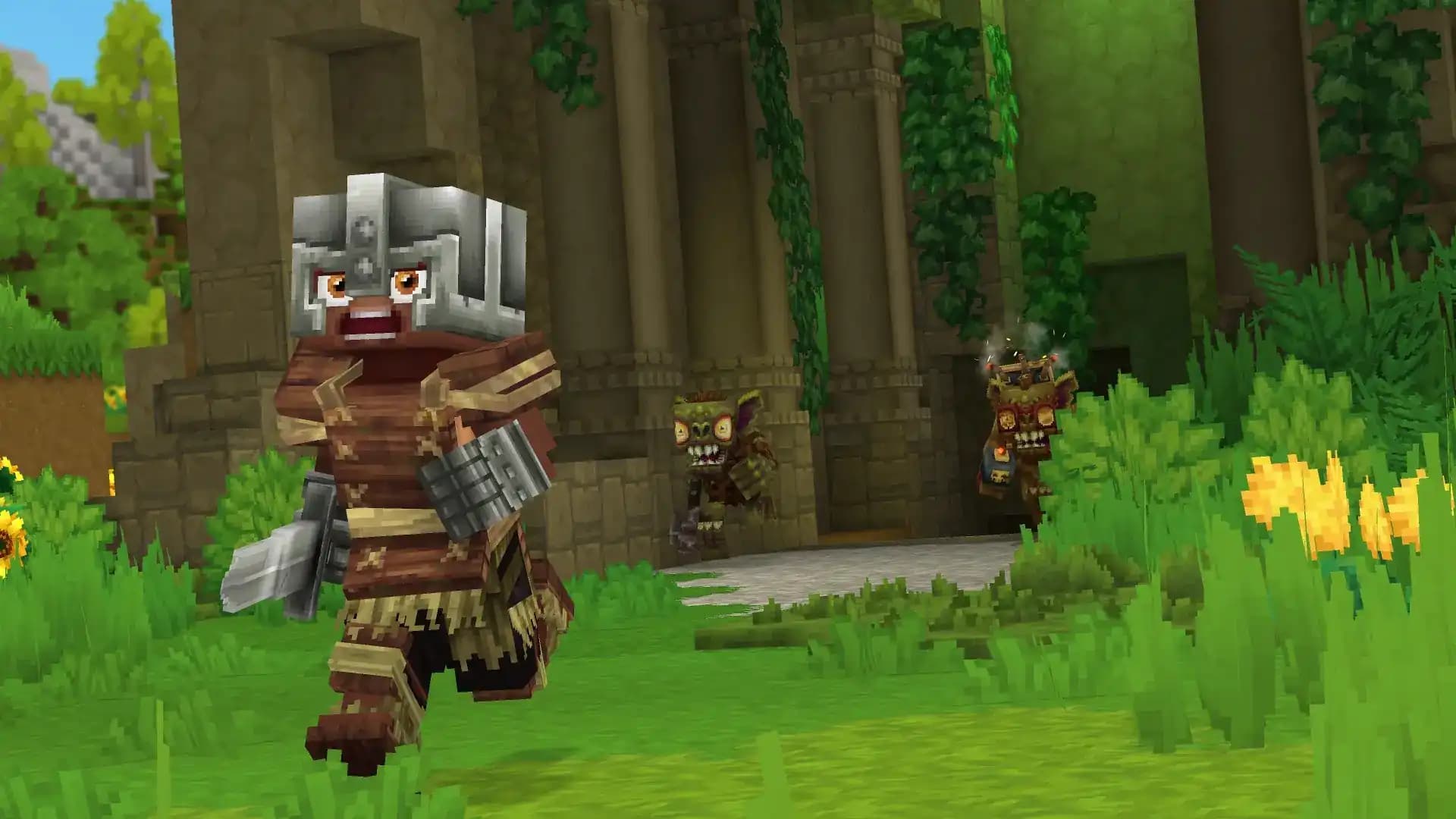
Hytale is positioned more like a sandbox that expects you to adventure,with stronger emphasis on curated experiences such as points of interest, encounters, dungeons, bosses, and possibly quest-like structures. The key distinction is not “one has crafting and the other doesn’t,” but whether the world is primarily a blank canvas (Minecraft) or a canvas with more built-in “content beats” (Hytale’s intended direction). If that holds true in the final game, it changes everything from pacing to how players discover goals.
Combat feel and depth: simplicity vs encounter-driven gameplay
Minecraft combat is accessible and readable, but relatively minimal in complexity. In many situations, the optimal strategy is straightforward: gear up, control spacing, manage hunger/health, and avoid being swarmed. Mobs are iconic, but their AI and encounter design are generally simple compared to modern action-adventure standards.
Hytale is expected to put more weight on combat as a “moment-to-moment” feature, not just a survival necessity. That could mean more expressive animations, clearer enemy telegraphs, more varied enemy behaviors, and fights that feel like designed encounters instead of random interruptions. The difference matters because it influences player decision-making: in Minecraft, combat is often a means to access resources and exploration; in Hytale, combat could be a major source of progression and excitement on its own.
For PvP, Minecraft’s competitive scene exists, but the base game’s mechanics weren’t originally built as a tight competitive combat system. If Hytale’s combat is designed with skill expression in mind,clean hit feedback, ability-like mechanics, clearer counterplay,it could produce a very different PvP meta. That’s not guaranteed, but it’s a major “watch this space” difference.
Tools, crafting, and progression: minimal ladder vs system-driven upgrades
Minecraft’s tools and crafting loop is famously clean: you climb tiers, build farms, and optimize. It’s elegant because it’s simple. The complexity comes from what the player builds on top of it,redstone systems, automation, megabases, and modded tech trees.
Hytale is expected to have more “systems” layered into the baseline experience. Instead of crafting being mainly about getting a pickaxe and scaling into enchantments, Hytale may push a broader set of gear progression and utility crafting (combat equipment, exploration aids, crafting stations, and possibly more specialized resource chains). If Hytale leans into RPG-style progression, tools might feel less like a quick ladder and more like part of a longer character journey.
Inventory management is another subtle difference. Minecraft’s limited inventory is part of its identity, and many players accept the friction as part of survival. If Hytale adds more adventure-focused loot and varied item types, it will almost have to provide stronger sorting, storage, and quality-of-life systems,or the looting loop becomes tedious. That would make the early-to-midgame feel meaningfully different: less time fighting your inventory, more time exploring and building.
World generation and exploration: atmosphere-first vs content-dense travel
Minecraft’s world generation is excellent at producing landscapes that inspire building. Exploration is rewarding, but it’s often “ambient”: you roam until you find something interesting, then you decide what to do with it. Structures exist, but the world is primarily a sandbox stage.
Hytale’s direction suggests exploration could be more “content-dense,” with more frequent points of interest and purposeful reasons to travel: dungeons, scripted events, biome-specific enemies, rare resources, or locations that support an RPG-like arc. If that’s the case, exploration becomes less about wandering until you get inspired and more about pursuing goals the world constantly places in front of you.
Traversal systems also matter here. Minecraft travel becomes trivial once you establish infrastructure (nether travel, elytra, ice roads). If Hytale emphasizes adventure, it may put more attention into how you move through the world,mounts, vertical exploration, environmental hazards, and reasons to engage with terrain instead of bypassing it.
Modding: community frameworks vs official creator-first tooling
Minecraft modding is powerful, but fragmented. You have multiple mod loaders, version differences, compatibility headaches, and a constant arms race against updates. The upside is freedom: the ecosystem is huge, and the community has proven it can build almost anything.
Hytale is widely expected to prioritize official tools for creators. If that’s delivered, it could lower the barrier to making high-quality content,custom mobs, animations, scripting, UI, quests, minigames,without needing as much third-party tooling. The biggest “real-world” benefit of official tooling isn’t just convenience. It’s stability: when the game updates, creators are less likely to see everything break at once if the APIs and distribution methods are designed for long-term compatibility.
Distribution is another major difference. Minecraft’s mod discovery is largely decentralized across many sites and launchers. That has pros (open ecosystem) and cons (safety, fragmentation, inconsistent quality). If Hytale goes for a more centralized creator pipeline, it could make discovery easier and safer for casual players,but it also raises questions about moderation, monetization, and what kinds of content are allowed.
Servers and multiplayer: homemade stacks vs built-for-minigames ecosystem
Minecraft multiplayer is extremely flexible, but it’s also a patchwork of hosting solutions, plugins, modpacks, and server management tools. Setting up a great server often requires technical work, and the experience varies wildly depending on the server owner’s skill and resources.
Hytale’s multiplayer philosophy is expected to be more “platform-like,” especially because it comes from a team closely associated with large-scale minigame servers. If Hytale includes robust server tech, scripting support, and creator tools from day one, it could make custom multiplayer experiences feel more standardized and accessible. That matters for players because it can improve consistency: joining servers, playing minigames, and switching modes could feel smoother and less dependent on third-party launchers and manual mod installs.
Moderation and anti-cheat also become huge at scale. Minecraft’s solutions are largely server-by-server, which is flexible but inconsistent. A more unified multiplayer platform can potentially provide stronger baseline tools,but it also requires careful design to avoid over-centralizing control.
Content creation and the “creator economy” question
Minecraft content creation is massive, but creators often rely on external tools, plugins, and community distribution channels. There’s a proven path for creators, but it’s not always streamlined.
If Hytale truly ships with creator tools that make building custom experiences easier, it could encourage a broader range of creators: not only programmers and technical server admins, but also map makers, artists, encounter designers, and storytellers. The long-term question is what kind of “creator economy” emerges,purely free community content, server monetization, marketplaces, cosmetics, or something else. This is where comparisons should stay cautious: monetization models shape communities dramatically, but you only know the impact once systems are public and players react.
Performance, accessibility, and platform reach
Minecraft runs on almost everything, especially in its simpler forms. It’s also mature enough that players can choose the version and performance setup that matches their hardware.
Hytale’s performance profile will depend on final engine decisions, optimization, and how complex its baseline content is (animations, AI, lighting, world density). If it aims for more detailed adventure content and visuals, hardware expectations may be higher than Minecraft’s lowest-end setups, but that doesn’t necessarily mean it won’t scale well. Accessibility features,controller support, UI scaling, input customization,also matter more if the game targets a wider set of platforms over time.
The risks and expectations: mature giant vs new ecosystem
Minecraft’s biggest advantage is maturity. It has a giant mod library, stable community knowledge, endless server types, and a gameplay loop people already understand. Even if you dislike a design choice, there are countless ways to customize the experience.
Hytale’s biggest advantage is potential: a chance to build an ecosystem where adventure content and creator tooling are first-class citizens from the start. The risk is also obvious: a new ecosystem takes time to fill with mods, servers, and community standards. Updates can be disruptive early on, and player expectations can collide with reality.
Which one is “better” depends on what you want
If you want a pure sandbox where simplicity gives you freedom, Minecraft is hard to beat. If you want a sandbox that pushes you toward structured adventures, deeper encounters, and creator-built experiences that feel like standalone games inside the game, Hytale’s vision (if achieved) could be a better fit.
The most realistic outcome is that they won’t replace each other. They’ll serve different moods: Minecraft for timeless simplicity and infinite community variety, Hytale for a more adventure-forward sandbox with a creator platform feel.
3