




The big picture: what’s the “theme” this time?
If you’re the kind of player who only checks updates when your launcher prompts you, it can be hard to tell what the “story” is. This time, the vibe is pretty clear:
- More personality in the world (especially through mobs and companions)
- More control for players (especially around naming, keeping, and organizing entities)
- A cadence that feels more incremental, smaller drops that stack into a bigger year
That combination tends to produce updates that don’t just add one flashy feature, but ripple into base design, survival progression, and multiplayer culture.
The headline-quality-of-life change: craftable Name Tags (and why it’s a big deal)
Name Tags have always been weirdly important. They’re not “powerful” in the way netherite is powerful, but they shape how people play:
- You name your first pet and suddenly you’re emotionally invested.
- You name villagers and your trading hall becomes manageable.
- You label mobs in farms and your builds become easier to debug.
If Name Tags become more accessible through crafting (as currently being tested), it’s a major shift in early- and mid-game pacing.
Why this matters for survival progression
Historically, Name Tags were limited by exploration and RNG (finding them in loot). That meant the “naming era” of a world often started late.
A craftable path means:
- Earlier pet naming (players bond sooner)
- Easier control of mob despawning and entity management
- More organized bases much earlier
Why this matters for servers
On multiplayer worlds, naming isn’t just cosmetic:
- Named mobs don’t despawn in the same way many other entities do, which can make farms and builds more stable.
- Roleplay communities immediately get more tools: towns, shops, arenas, zoos, everything benefits from labeling.
The balancing question will be cost: if the recipe is cheap, Name Tags become a default tool; if it’s expensive, it becomes a “choose your favorites” moment. Either way, the update nudges Minecraft toward more intentional worlds.
How to craft Name Tag in new updted?
To craft Name Tag in new update, here is what you need:
- 1pc of Paper
And any of the following nuggets:
- 1pc of Copper Nugget
- 1pc of Iron Nugget
- 1pc of Gold Nugget
Here is the new Name Tag recpies:
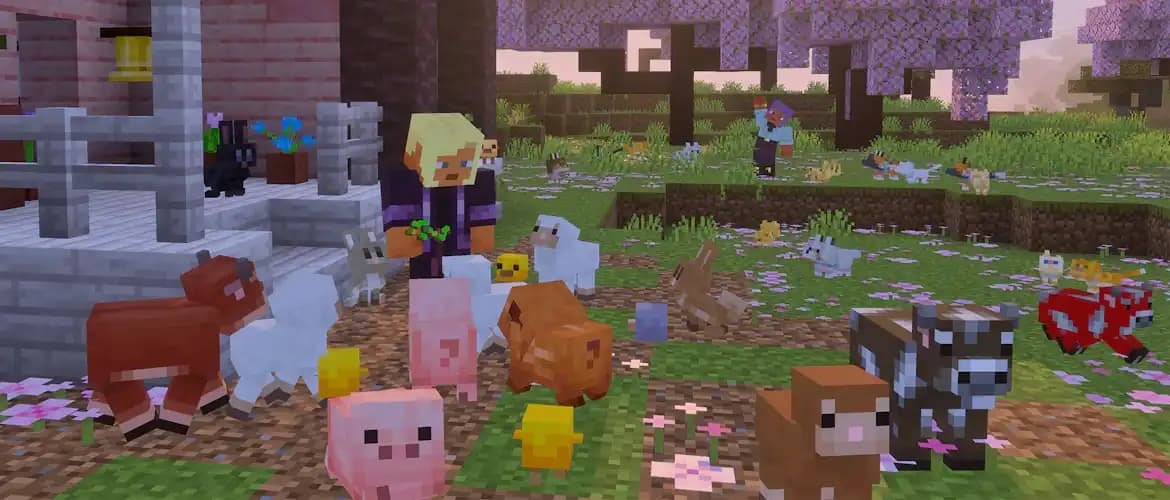
“The Cutest Drop Yet”: baby mob overhaul , exactly which babies are changing, and what’s new about them
This part of the update isn’t just “baby mobs are smaller.” Mojang is actively replacing the old approach (mini adult model + big head) with bespoke baby models, textures, and sounds, so babies look and feel like their own life stage.
Which baby mobs are included (so far)
Based on the official snapshot notes and Mojang’s “cutest drop” announcements, the update currently covers two big groups:
A) Farm / overworld passive babies getting new models & textures
These are the “headline” reworks you’ll see most often in survival:
- Cow (Calf)
- Sheep (Lamb)
- Pig (Piglet)
- Chicken (Chick)
- Wolf (Wolf pup)
- Cat (Kitten)
- Ocelot (Baby ocelot)
- Mooshroom (Baby mooshroom)
- Rabbit (Baby rabbit) , both adult and baby rabbits also get new animations
Baby Mobs Gallery
These are the mobs Mojang has explicitly listed in snapshot changelogs as receiving updated baby models/textures (with rabbits also getting animation updates).
B) Baby mounts getting new looks (a second wave)
Mojang also brought in redesigned baby mounts, which is huge for players who keep stables or breed horses:
- Horse (foal / baby horse)
- Donkey (baby donkey)
- Mule (baby mule)
- Zombie horse (baby zombie horse)
- Skeleton horse (baby skeleton horse)
Baby Mule
Snapshot notes also mention bounding box tweaks for some of these babies to better fit their new models (i.e., their “physical space” matches their updated shape).
Baby Donkey
What actually changes in-game (beyond “they’re cuter”)
They’re not “scaled-down adults” anymore
The goal is clear: baby mobs now have distinct silhouettes and proportions so they read instantly as babies, not just tiny adults. This improves visual clarity in crowded pens and farms, and it also makes the world feel more alive.
Baby-specific audio (not just pitch-shifted adult sounds)
Mojang is also reworking baby mob audio so babies don’t sound like adults with a squeaky filter. That seems small, but it changes the vibe of bases and farms a lot, especially for players who spend time breeding and building “cozy” animal areas.
Small but important rendering/behavior adjustments
Snapshots mention practical details like:
- Armor on baby wolves and saddles on baby pigs no longer rendering (so visuals match what makes sense on baby models).
- Bounding box tweaks for certain babies to align with their new shapes.
Why this matters for gameplay (and not just aesthetics)
For survival players:
- You’ll notice it immediately in farms, breeding pens, and villages, babies are easier to spot and feel more “real.”
- It encourages players to keep animals around (and name them), which fits perfectly with the update’s broader “personal world” vibe.
For builders and roleplay communities:
- Baby mobs become “set dressing” with more character: pet shelters, stables, zoos, and town builds gain a lot of charm for free.
For technical players/server admins:
- Anytime models/bounding boxes and entity presentation change, it’s worth testing high-entity areas (big farms, stables) just to make sure your setups still behave as expected in the newest builds.
The patch-note iceberg: changes that creators and technical players should watch
Every update has two layers:
- the stuff players talk about on day one
- the stuff that quietly breaks (or unlocks) entire categories of maps, data packs, and server tools
If you’re a creator, admin, or technical player, your main questions are always:
- What changes in commands/data?
- What new edge cases appear?
- What will break old worlds and contraptions?
A practical checklist for technical players
Test on a copy of your world immediately.
Check:
- mob farms (spawning rules & entity behavior)
- villager halls (pathfinding/trading quirks)
- redstone timing (rare, but devastating when it happens)
- datapack functions and predicates
Even if this update is “mostly mobs and QoL,” those are exactly the kinds of updates that can subtly affect entity behavior and tick load.
Java vs Bedrock: what’s shared, what’s different, and what comes first
Whenever an “upcoming Minecraft update” is being tested, the biggest source of confusion (and comment-section chaos) is edition parity.
That’s because Java and Bedrock often get features through different testing pipelines, sometimes with different timing, toggles, and even slightly different behavior.
Java Snapshot vs Bedrock Preview/Beta: the practical difference
Java Edition (Snapshots)
- Snapshots are the main “early look” builds for Java.
- They’re usually easy to access from the launcher (separate from stable releases).
- Java snapshots often feel like the first place features are publicly iterated, but that doesn’t guarantee they’re final.
Bedrock Edition (Preview / Beta)
- Bedrock testing is typically split into Preview (more stable channel) and Beta (more experimental, depending on platform).
- New features are commonly gated behind Experimental toggles in world settings.
- Bedrock’s feature rollout can depend on platform (Windows/Xbox/PlayStation/Switch/mobile can differ in how quickly updates land).
What this means for readers:
A feature “exists” when it’s in testing builds, but it isn’t officially yours until it’s in a stable release for your edition.
Why features sometimes arrive at different times
Even when Mojang wants parity, these realities can cause staggered release:
- Different codebases: Java and Bedrock aren’t the same engine. A feature that’s simple in one can be tricky in the other.
- UI and input differences: Bedrock supports controller/touch UI, which can require additional design work.
- Performance targets: Bedrock runs on a huge range of devices, including lower-power hardware, so optimization and edge cases matter more.
- Multiplayer ecosystem: Bedrock servers/Realms and marketplace content sometimes create extra constraints.
So if you see something in Java first, it might simply be easier to test there quickly.
“Experimental toggles” on Bedrock: what they signal
If a feature is behind an Experimental switch on Bedrock, it usually means one of these:
- It’s still being actively changed (mechanics may shift).
- Mojang wants players to test it without breaking standard worlds.
- It might affect world generation, entity behavior, or performance enough that it needs an opt-in phase.
Blog tip: If you mention a feature that’s experimental, add a one-line warning like:
That single sentence saves you from angry comments later.
Typical parity differences (that are worth calling out)
When a feature appears in both editions, differences often show up in:
- Timing: one edition gets it first, the other follows later.
- Activation: Java = just load the snapshot; Bedrock = you may have to flip toggles when creating a world.
- Behavior details: UI flow, interaction rules, edge cases.
- Technical hooks: commands, add-ons/modding capabilities, and datapack/add-on parity aren’t always 1:1.
- Performance & entity limits: Bedrock may behave differently under high-entity load (farms, massive villages, mob pens).
This is why it’s smart to avoid absolute statements like “this works exactly the same” until stable release notes confirm it.
How to try it safely (without losing your world)
This section is pure value and earns bookmarks.
Best practice: a zero-drama testing setup
Back up your world (copy the folder or use an in-game copy option if available).
Create a separate test world that resembles your main world (same farms, same village setup).
Avoid updating a long-term multiplayer server until:
- the update is stable
- your essential plugins/mods are compatible
- you’ve tested performance
What to look for during testing
- any weird mob AI changes
- villager behavior
- performance dips in high-entity areas (farms, pens, storage rooms with lots of item frames, etc.)
The meta-shift: smaller “drops” and what that means for players
Minecraft’s update strategy has been evolving. Instead of one massive “everything changes” release, there’s a growing sense of:
- more frequent iterations
- more focused themes
- features arriving in clusters
For players, this can be a win:
- less waiting for “the big thing”
- less risk of massive overhauls that split the community
- more reasons to revisit worlds regularly
For bloggers and creators, it means your content strategy changes too:
- fewer “one definitive update post”
- more “rolling coverage” as features appear and evolve
Community reactions and real use-cases (the fun part)
If the update really is leaning into naming and baby mobs, expect community trends like:
- “First Day Pet Naming” challenges
- Base builds designed as sanctuaries (stables, pens, pet rooms, micro-zoos)
- Roleplay towns where every villager and shop has a name
- Servers turning naming into economy (pay-to-name shops, name tag vending, etc.)
This is where your blog can become interactive: include polls like
“What’s the first mob you’ll name?”
and you’ll get comments that keep the post alive.
Speculation corner (clearly labeled)
Speculation is great, if you label it properly and stay grounded.
If Mojang is experimenting with easier naming and more expressive baby mobs, it could hint at broader goals:
- smoother player attachment to animals and villagers
- more “life sim” vibes without turning Minecraft into a different genre
- expanding the “care and curation” side of gameplay (pets, farms, towns)
But: until official release notes confirm future additions, keep this section light and clearly marked as “maybe.”
FAQ
When is the update coming out?
If it’s still in snapshots/previews, there’s no guaranteed date. Expect more changes before a stable release.
Are Name Tags definitely craftable?
If you’ve only seen it in testing builds, treat it as “being experimented with.” Recipes and availability can change before release.
Which baby mobs are getting updated?
Look for official changelogs or your specific snapshot/preview notes, this can evolve week to week.
Will this affect farms and performance?
Possibly, especially in high-entity builds. Test your farms on a copy of your world if you rely on them.
Is this update the same on Java and Bedrock?
Not always at first. Features may arrive at different times or with slightly different behavior until parity is confirmed.
Final thoughts: why this update might matter more than it looks
Updates that focus on “small” things, naming, baby mobs, readability, quality-of-life, often age the best. They don’t just impress you for a weekend; they change how your world feels for months.
If you’re writing about this update, don’t just list features. Tell readers what those features enable:
- earlier attachment to pets
- cleaner villager management
- more expressive builds and communities
- worlds that feel more personal
